Alexandria • Dumfries • Washington DC
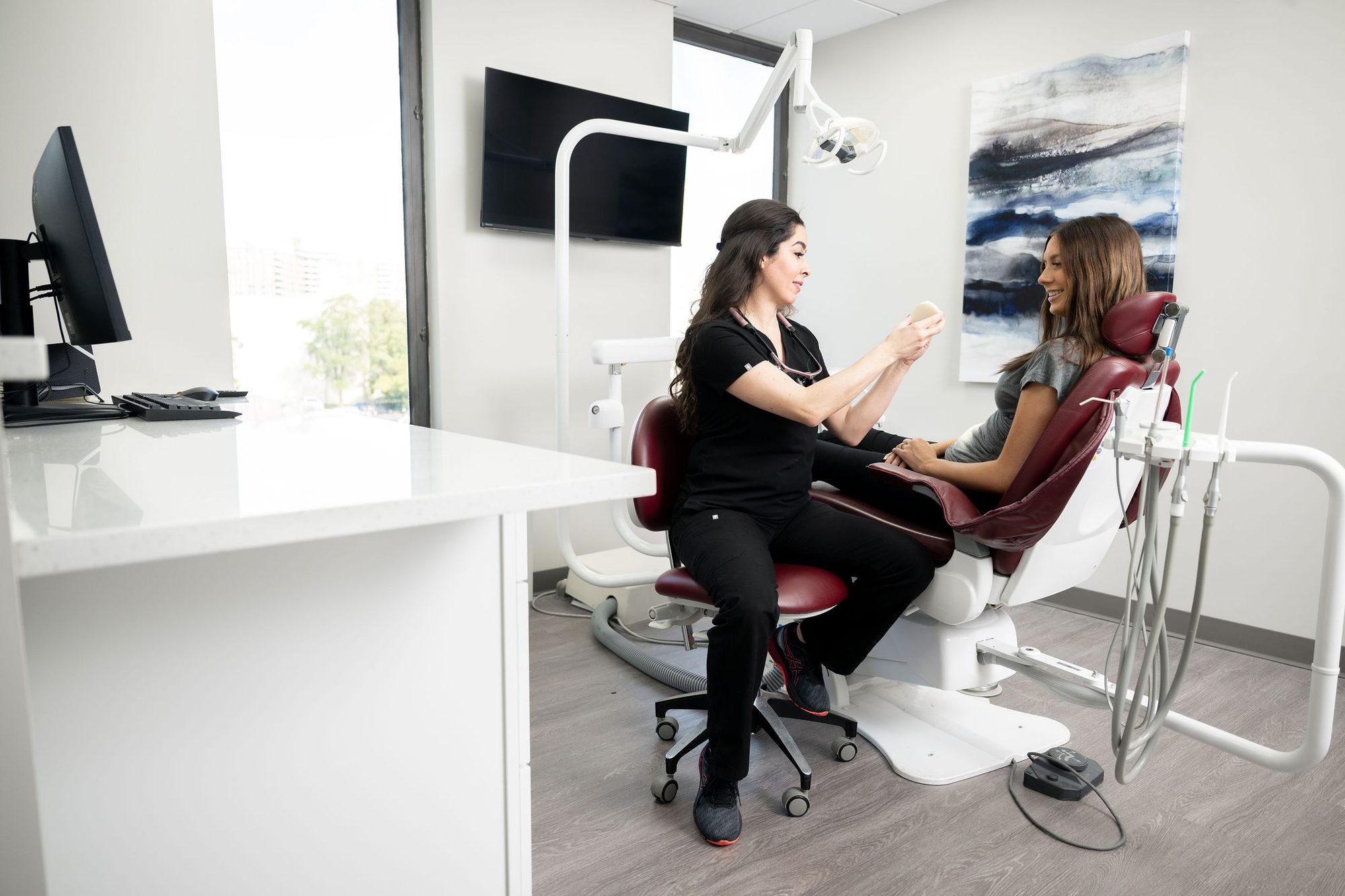
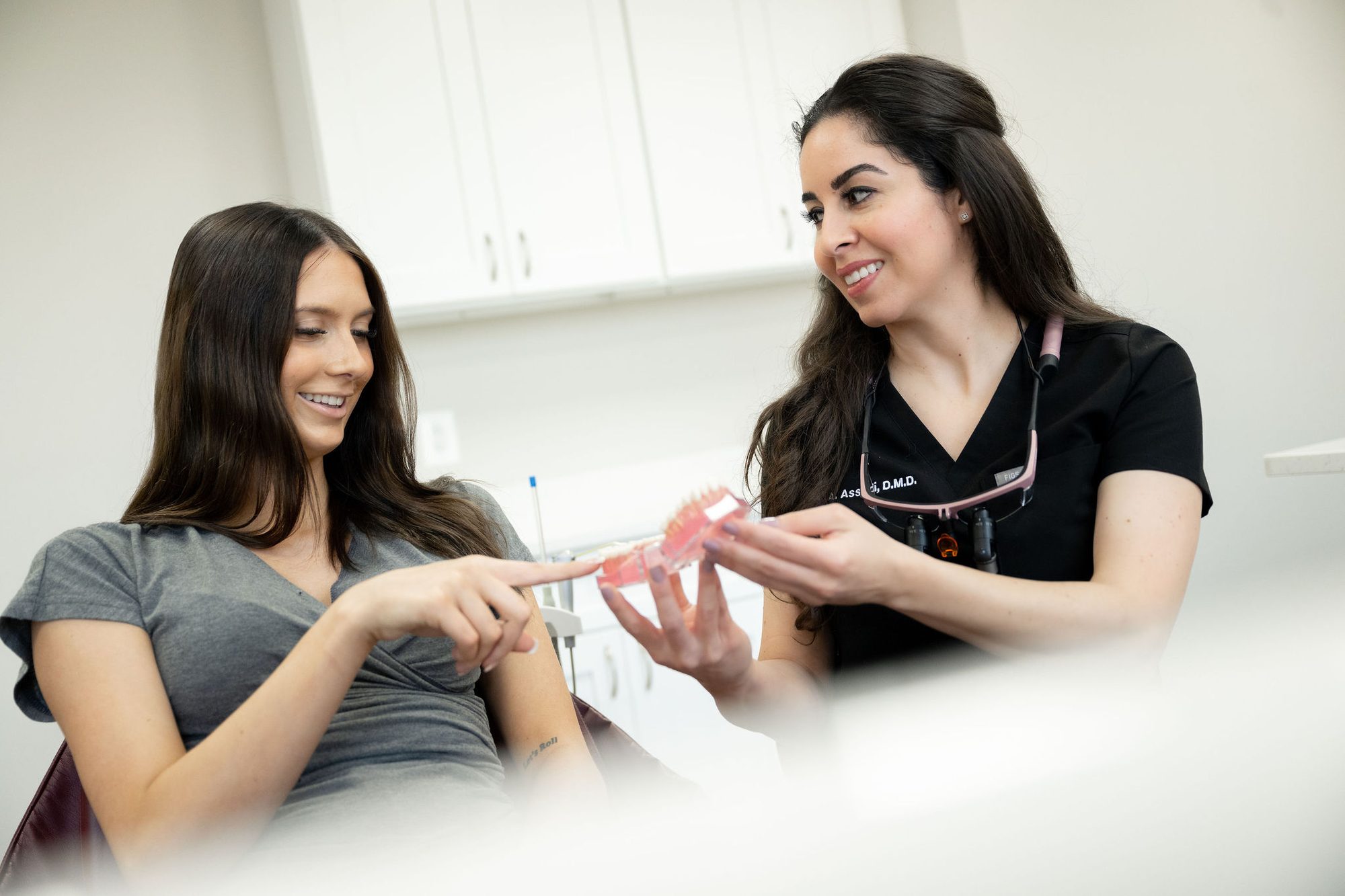
Dentist reviewing a sleep study with a patient
Sleep Medicine

Sleep better. Without the mask.

For mild-to-moderate obstructive sleep apnea, a custom oral appliance holds your jaw gently forward overnight to keep your airway open, no machine, no mask, no hose.

Alexandria Dumfries Washington DC
FDA-Cleared Oral Appliances For Mild-to-Moderate OSA No Mask or Hose Custom-Fit & Adjustable In-Network with Most PPOs Sleep Study Coordination FDA-Cleared Oral Appliances For Mild-to-Moderate OSA No Mask or Hose Custom-Fit & Adjustable In-Network with Most PPOs Sleep Study Coordination
Overview

A custom appliance that keeps your airway open.

Obstructive sleep apnea happens when the soft tissue at the back of your throat collapses during sleep, blocking airflow. A mandibular advancement device is a custom-fitted appliance, worn like a nightguard, that holds your lower jaw slightly forward, which pulls the tongue and soft tissue away from the airway so breathing stays open through the night.

Oral appliance therapy is a well-established, FDA-cleared treatment for mild-to-moderate OSA and for primary snoring, and many patients who can't tolerate CPAP use it successfully instead. It is important to be honest about its limits: for severe OSA, CPAP remains the gold-standard treatment, and we won't recommend an appliance as a substitute when the diagnosis calls for CPAP.

1
Appliance, No Machine
3–6mo
Sleep Study Follow-Up
2Types
Mild–Moderate OSA, Snoring
Consultation about oral appliance therapy for sleep apnea
Is It Right For You?

When an oral appliance is appropriate.

Oral appliance therapy has a real and specific role in sleep apnea treatment. We coordinate with your physician or a sleep study to confirm it's the right fit before we build anything.

Diagnosed Mild-to-Moderate OSA

A sleep study showing mild or moderate obstructive sleep apnea is the clearest indication for oral appliance therapy.

CPAP Intolerance

Many patients with more severe OSA who can't tolerate CPAP long-term are candidates for an appliance as an alternative, in coordination with their physician.

Primary Snoring

If a sleep study rules out significant apnea but snoring is disruptive, an appliance can reduce or eliminate it.

Travel-Friendly Treatment Preferred

An appliance fits in a small case with no power source or hose, which some patients find easier for travel than a CPAP machine.

Good Dental & Jaw Health

Candidates need enough healthy teeth to anchor the appliance and a jaw joint that tolerates the forward position without pain.

The Process

From diagnosis to a better night's sleep.

01

Sleep Study & Diagnosis

If you don't already have a diagnosis, we help coordinate a home or in-lab sleep study with a physician to confirm OSA severity. This step isn't optional, appliance therapy starts with a real diagnosis, not a guess.

02

Oral & Airway Evaluation

We examine your teeth, gums, and jaw joint to confirm you're a good candidate and check for anything, like active gum disease, that needs attention first.

03

Custom Appliance Fabrication

We take a digital scan of your bite and send it to a lab that fabricates a custom mandibular advancement device fitted specifically to your teeth and jaw.

04

Fitting & Titration

We fit the appliance and gradually adjust the jaw position over several weeks to find the setting that controls symptoms with the least discomfort, then follow up with a repeat sleep study to confirm it's working.

Close-up of a custom oral appliance for sleep apnea

Quieter nights. No machine required.

Oral Appliance vs. CPAP

Where an appliance fits, and where it doesn't.

CPAP is more effective at controlling apnea across all severity levels and remains the standard for severe OSA. An oral appliance is a smaller, quieter option for mild-to-moderate cases, or for patients who've tried CPAP and can't tolerate it.

 
Oral Appliance
CPAP
Best For
Mild-to-moderate OSA, snoring
All severities, gold standard for severe OSA
Equipment
Small custom mouthpiece
Machine, mask & hose
Power Source
None needed
Requires electricity
Travel
Fits in a small case
Bulkier, needs power access
Typical Adherence
Higher, better tolerated by many
Lower long-term compliance for some patients
Effectiveness for Severe OSA
Limited, not first-line
Most effective, first-line treatment
Follow-Up Needed
Repeat sleep study to confirm control
Data download & physician review
Investment

Cost, insurance & financing.

Get a Quote

Oral appliance therapy is often partially covered by medical insurance, not dental insurance, since sleep apnea is a medical diagnosis, we help you understand which applies and verify benefits before starting. Cost depends on the appliance type and how much titration and follow-up your case needs. CareCredit and Lending Club financing are available for any remaining balance.

In-Network

Most PPO Plans

Our clinic is in network with most PPOs and accepts all insurance plans. We'll verify your benefits and file the claim on your behalf.

  • Coverage & co-pay verification
  • Annual deductible review
  • Claim filed for you
Financing

Interest-Free Options

Spread payment over time with interest-free financing through Lending Club or CareCredit, so cost isn't the reason you delay treatment.

  • LendingClub interest-free financing
  • CareCredit accepted
  • Discover, Visa, MasterCard & Amex
Members Save

Dental Serenity Membership Club

Not insured? Our in-house membership plan simplifies preventative care and saves on treatment, a smart alternative when insurance isn't a fit.

Learn About Membership
Your Care Team

Four doctors. One standard of care.

Our team coordinates with sleep physicians on every oral appliance case, so treatment is based on your actual diagnosis, not assumptions about your symptoms.

AA

Dr. Assal Assadi

DMD, Tufts University

Over a decade of practice in the DC area. Certified Invisalign provider and AAFE-certified in Botox therapeutics for TMJ and facial pain.

NR

Dr. Narissa Ross

DMD, UAB · AEGD, NYU Langone

Restorative, cosmetic, and complex oral surgery. Invisalign and dental implant certified, with a special focus on patients with dental anxiety.

OT

Dr. Omar Taha

DMD, East Carolina University

Compassionate care with a friendly approach. A Fairfax native who combines clinical expertise with genuine warmth that puts patients at ease.

AT

Dr. Aadil Toor

DDS, Univ. of Nebraska Medical Center

Multi-disciplinary, comprehensive dentistry with a pragmatic approach. Passionate about patient education and staying current with advances in dental care.

Common Questions

What patients ask about oral appliance therapy.

Still have questions? Book a consultation at any of our three offices and we'll walk you through your options in plain language.

Book Consultation
Do I need a sleep study first?

Yes. We won't fit an oral appliance without a diagnosis confirming OSA severity, either from a prior sleep study or one we help coordinate. This protects you, an appliance that isn't matched to your actual severity level won't control your symptoms properly.

Can an oral appliance treat severe sleep apnea?

Generally not as a first-line treatment. CPAP remains the most effective option for severe OSA. An oral appliance may be considered for severe cases only when a patient genuinely cannot tolerate CPAP, and that decision should involve your sleep physician alongside us.

Is the appliance comfortable?

Most patients adjust within one to two weeks. Some mild jaw soreness or increased saliva in the first few nights is common as your mouth adapts, and we gradually titrate the jaw position to minimize discomfort while still controlling your symptoms.

How do I know if it's working?

We schedule a follow-up sleep study after you've adjusted to the appliance to confirm your apnea is actually controlled, not just assume it based on how you feel. Feeling more rested is a good sign, but the follow-up study is what confirms it.

Will insurance cover it?

Oral appliance therapy for sleep apnea is typically billed to medical insurance rather than dental insurance, since OSA is a medical diagnosis. We verify your specific medical benefits and let you know your expected out-of-pocket cost before we begin.

Can I switch back to CPAP later if the appliance isn't enough?

Yes, and we'll tell you honestly if a follow-up sleep study shows the appliance isn't adequately controlling your apnea. Some patients also use both at different times, depending on travel or comfort, in coordination with their physician.

Where to Start

Book your sleep apnea consultation.

Alexandria office interior

Alexandria, VA

4660 Kenmore Ave, Suite 312
Alexandria, VA 22304
(703) 997-6307
Mon–Fri 8am–5pm · Sat 8am–2pm
Dumfries office interior

Dumfries, VA

17181 Wayside Dr
Dumfries, VA 22026
(703) 445-9600
Mon–Tue 8am–5pm · Wed–Thu 8am–7pm
Fri 8am–3pm · Sat 8am–2pm
Washington DC office interior

Washington, DC

1145 19th St NW, Suite 800
Washington, DC 20036
(202) 296-7455
Mon–Fri 8am–5pm · Sat 8am–2pm
Ready When You Are

Find out if an oral appliance fits your diagnosis.

Bring your sleep study if you have one, or let us help you get one scheduled. We'll give you a straight answer on whether an oral appliance is appropriate for your severity level.

No pressure. No obligation. Just a clear picture of what's possible.

Book an Exam Call Any Location
Dental Serenity doctor with patient
Schedule Your Consultation

Ready to sleep better?

New patients always welcome. Fill out the form and we'll reach out to talk through oral appliance therapy, or call the office nearest you.