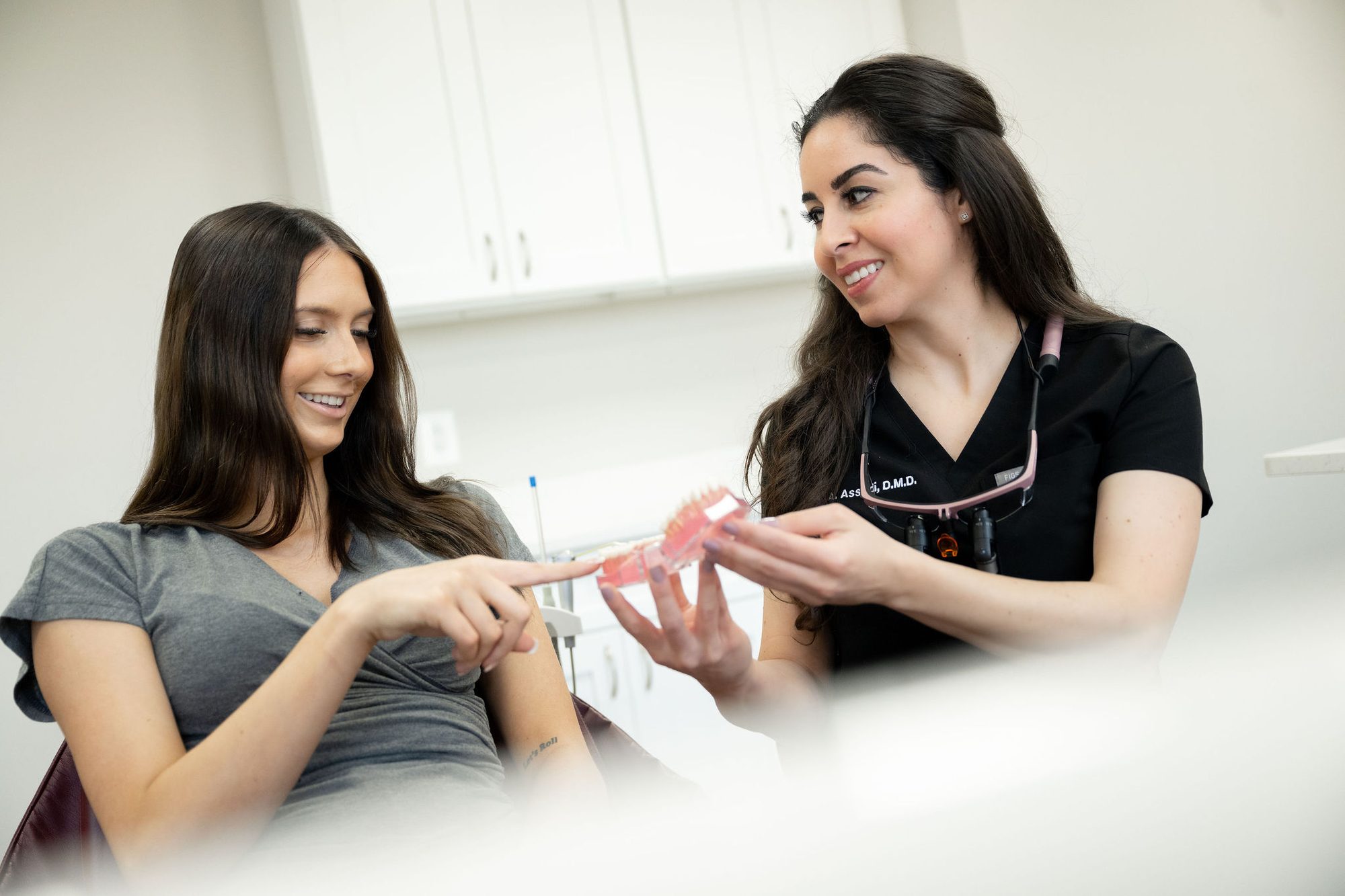
A bone graft rebuilds jawbone that's been lost to a missing tooth, gum disease, or an old extraction, creating a solid foundation before an implant is placed.
Jawbone needs the pressure of a tooth root to stay dense. Once a tooth is gone, the bone underneath it starts to shrink within months, and it keeps shrinking the longer the space sits empty. Gum disease and old, poorly healed extractions can accelerate the same loss.
A bone graft adds material to that area, sometimes your own bone, sometimes a biocompatible graft material, and gives your body a scaffold to rebuild around. Over a few months it integrates with your existing bone, creating enough width and height to anchor an implant securely.
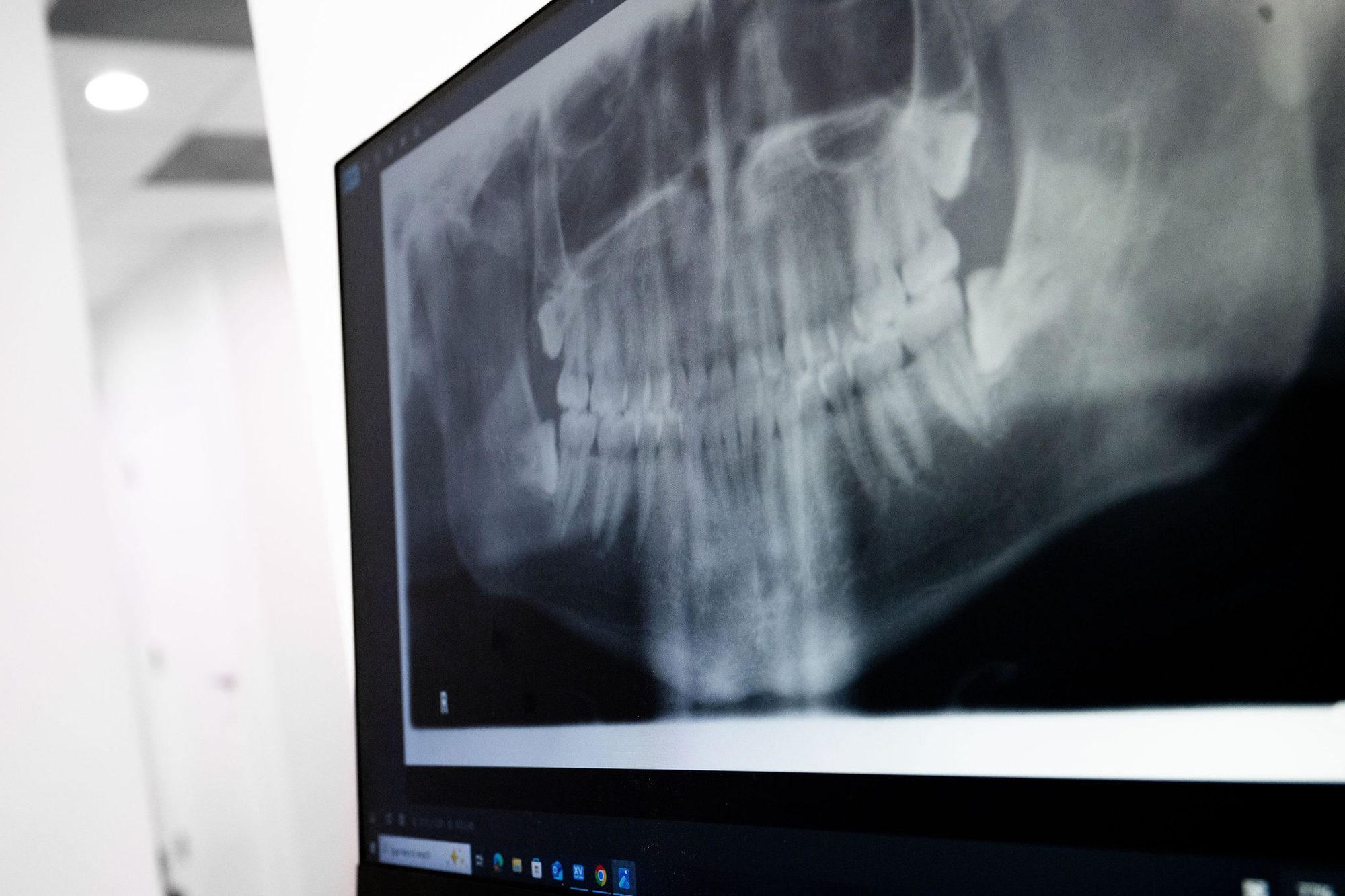
Not every implant needs a graft first, some patients have plenty of bone already. A 3D scan tells us exactly how much is there and whether grafting is necessary.
If the jawbone at the implant site is too thin or short, a graft builds it up first so the implant has a stable base.
Bone that's had months or years to shrink often needs augmentation before it can support a new tooth.
Periodontal disease can erode the bone supporting your teeth, which a graft can help rebuild.
A graft placed at the time of extraction, called ridge preservation, prevents the bone from shrinking in the first place.
If an existing implant is loosening due to bone loss around it, grafting can rebuild the support before it fails completely.
A visibly sunken area where a tooth used to be is a sign the bone underneath has resorbed and may need building up.
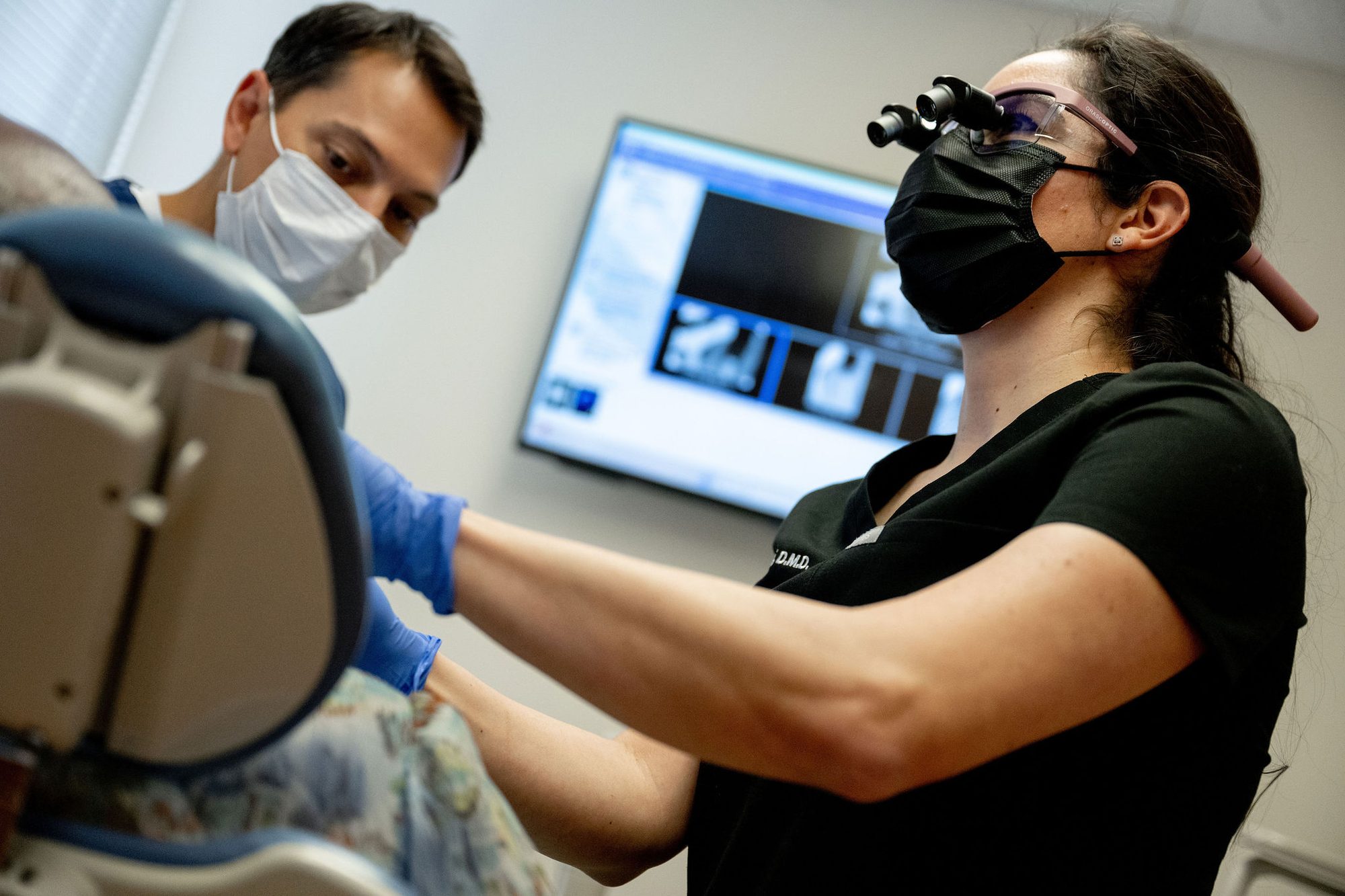
We take a 3D scan to measure exactly how much bone is present and map out how much needs to be added before an implant can be placed.
The area is fully numbed, sedation is available if you'd like it. Graft material is placed at the site and covered with a protective membrane to hold it in position.
Over roughly three to six months, your bone grows into and around the graft material, forming solid new bone at the site.
Once the graft has fully integrated and we've confirmed it on a follow-up scan, the implant is placed into the newly rebuilt bone.
An implant can occasionally be placed into thin bone, but doing so raises the risk of the implant failing or the bone continuing to recede around it. Grafting first takes more time upfront but gives the implant a foundation built to last.
Bone graft cost depends on how much bone needs to be rebuilt and whether it's a small ridge preservation graft or a larger augmentation. Some dental insurance plans provide partial coverage for grafting connected to a covered implant. We'll verify your benefits and give you an exact out-of-pocket number before we begin.
Our clinic is in network with most PPOs and accepts all insurance plans. We'll verify your benefits and file the claim on your behalf.
Spread payment over time with interest-free financing through Lending Club or CareCredit, so cost isn't the reason you delay treatment.
Not insured? Our in-house membership plan simplifies preventative care and saves on treatment, a smart alternative when insurance isn't a fit.
Learn About MembershipOur team plans implant and bone graft cases together, so the graft is built with the final tooth in mind from day one.
Over a decade of practice in the DC area. Certified Invisalign provider and AAFE-certified in Botox therapeutics for TMJ and facial pain.
Restorative, cosmetic, and complex oral surgery. Invisalign and dental implant certified, with a special focus on patients with dental anxiety.
Compassionate care with a friendly approach. A Fairfax native who combines clinical expertise with genuine warmth that puts patients at ease.
Multi-disciplinary, comprehensive dentistry with a pragmatic approach. Passionate about patient education and staying current with advances in dental care.
Bone grafting sounds more intense than it is. Book an exam at any of our three offices and we'll show you exactly what your scan shows.
Book ConsultationThe area is fully numbed before the procedure, so it shouldn't be painful while we're working. Expect some soreness and mild swelling for a few days afterward, similar to a tooth extraction, and we'll give you specific aftercare instructions and pain management guidance.
Most grafts need three to six months to fully integrate with your existing bone before an implant can be placed. Smaller ridge preservation grafts done at the time of extraction sometimes allow for a shorter wait, which we'll confirm with a follow-up scan.
Depending on the site, we may use your own bone, a processed donor or synthetic graft material, or a combination. All the materials we use are biocompatible and chosen based on how much bone needs to be rebuilt and where.
Sometimes, if there's already enough bone. But placing an implant into bone that's too thin raises the risk of the implant loosening or failing over time. We'll only recommend skipping the graft if your 3D scan shows you genuinely have enough bone to support it.
The goal of grafting is actually to restore your jaw's natural contour where bone has shrunk, so most patients see their ridge shape improve rather than change in an unwanted way. Any visible change is typically a return toward how the area looked before the tooth was lost.
Mostly, but it's also used to rebuild bone lost to gum disease around existing teeth or to preserve a ridge right after an extraction, even if an implant isn't planned right away.
Bring us the site where a tooth is missing. We'll take a 3D scan, measure exactly how much bone is there, and tell you honestly whether grafting is needed before an implant.
No pressure. No obligation. Just a clear picture of what's possible.
New patients always welcome. Fill out the form and we'll reach out to schedule your exam, or call the office nearest you.