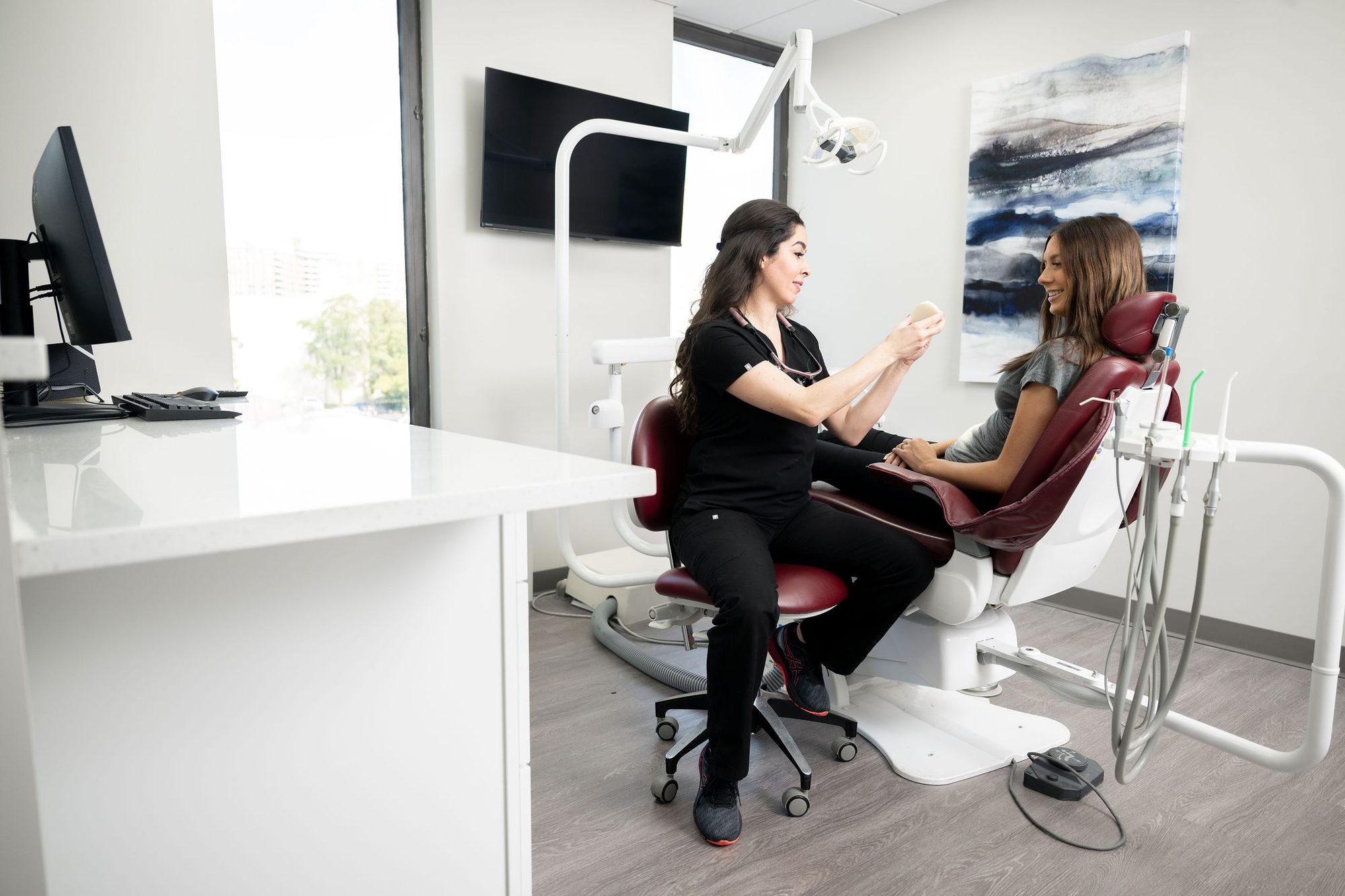
A deep cleaning, scaling and root planing, removes the bacteria and tartar that have spread below your gumline, stopping gum disease before it costs you bone and teeth.
When gum disease progresses past the earliest stage, plaque and tartar migrate below the gumline, onto the tooth root itself. A routine cleaning can't reach that far down, and by that point brushing alone won't touch it either. Left alone, it keeps eating away at the bone that holds your teeth in place.
Scaling and root planing goes where a regular cleaning doesn't: we clear the tartar and bacterial buildup from the root surface, then smooth the root itself so gum tissue can reattach and heal instead of pulling further away. Because it's working below the gumline on tissue that's already inflamed, the area is numbed first and the mouth is treated in sections, usually two visits covering two quadrants each.
Catching it here matters, this is the treatable stage before gum disease turns into bone loss and loose teeth.
A deep cleaning isn't the default, it's specifically for gum disease that's already progressed below the surface. At your exam we'll measure your gum pockets and tell you honestly whether this is the treatment that fits.
Bleeding when you brush or floss is one of the earliest signs of gum inflammation heading toward disease.
We measure the space between tooth and gum at every exam. Deeper pockets mean tartar has moved below the gumline.
Chronic bad breath that a cleaning and better brushing don't fix is often bacteria trapped below the gumline.
Gums pulling away from teeth, or tender to the touch, point to inflammation that's already active.
A later sign, but one that means the bone supporting your teeth is already being affected.
If a previous dentist flagged periodontal disease and it's gone untreated, this is the standard first step.
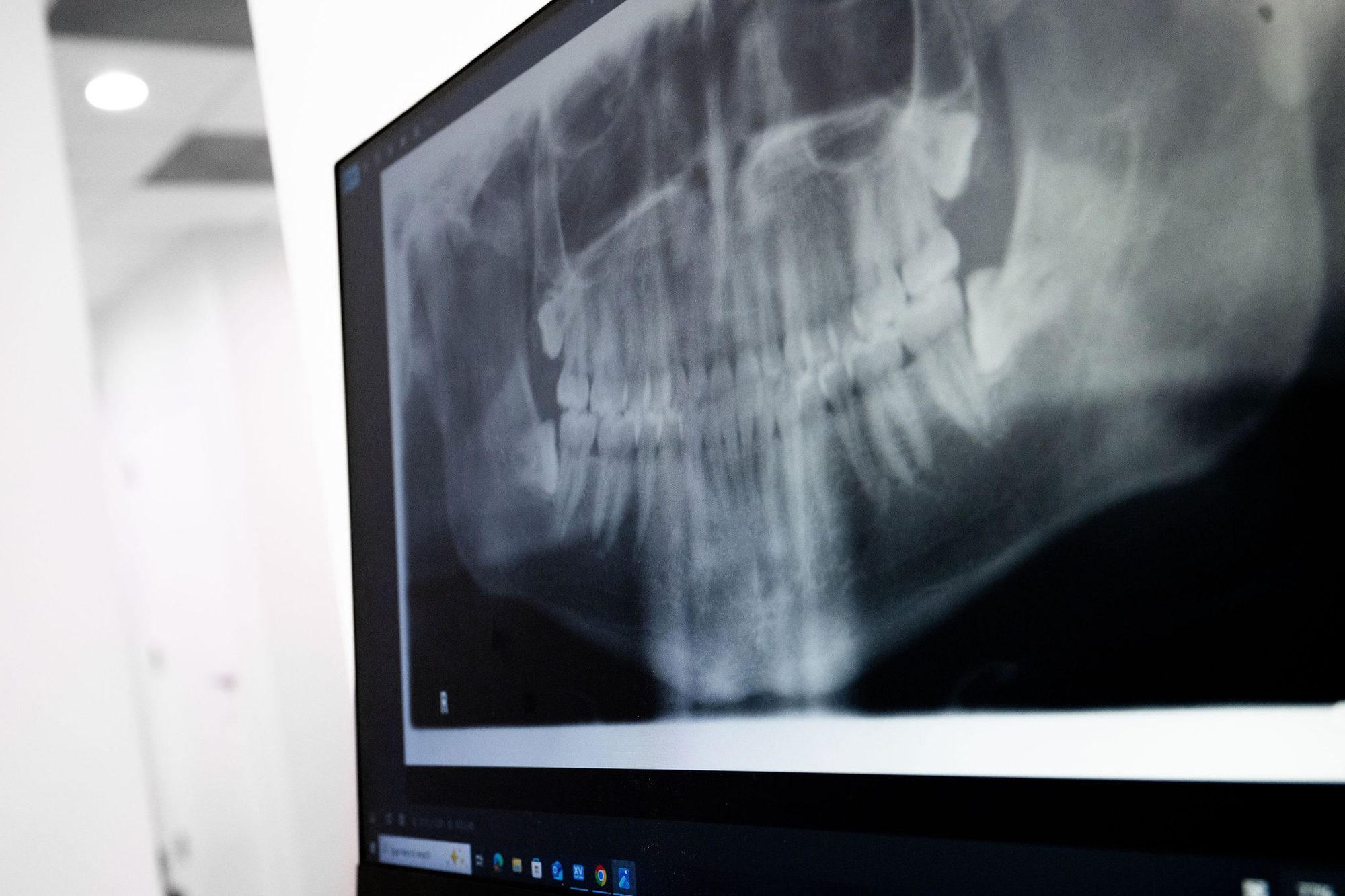
We measure gum pocket depth around every tooth and take X-rays to see how much bone has been affected.
Because we're working at the root surface below inflamed gum tissue, the quadrant being treated is fully numbed first.
We remove tartar and bacteria from the root surface, then smooth the root so gum tissue can reattach cleanly.
We see you back in 4 to 6 weeks to remeasure pockets and confirm the tissue is healing before returning to normal cleanings.
A deep cleaning is often mistaken for a more thorough version of a regular cleaning. It's actually a different procedure entirely, aimed at an infection a regular cleaning can't reach.
Deep cleaning cost depends on how many quadrants need treatment and whether any additional periodontal care is needed. Most dental insurance plans provide partial coverage for scaling and root planing as periodontal treatment, and we offer financing through Lending Club and CareCredit for anything left over. We'll verify your benefits and give you an exact out-of-pocket number before treatment begins.
Our clinic is in network with most PPOs and accepts all insurance plans. We'll verify your benefits and file the claim on your behalf.
Spread payment over time with interest-free financing through Lending Club or CareCredit, so cost isn't the reason you delay treatment.
Not insured? Our in-house membership plan simplifies preventative care and saves on treatment, a smart alternative when insurance isn't a fit.
Learn About MembershipOur hygiene team and dentists work together on periodontal cases, so your treatment plan and follow-up care stay consistent visit to visit.
Over a decade of practice in the DC area. Certified Invisalign provider and AAFE-certified in Botox therapeutics for TMJ and facial pain.
Restorative, cosmetic, and complex oral surgery. Invisalign and dental implant certified, with a special focus on patients with dental anxiety.
Compassionate care with a friendly approach. A Fairfax native who combines clinical expertise with genuine warmth that puts patients at ease.
Multi-disciplinary, comprehensive dentistry with a pragmatic approach. Passionate about patient education and staying current with advances in dental care.
Still have questions? Book an exam at any of our three offices and we'll walk you through your options in plain language.
Book ConsultationThe quadrant being treated is numbed first, so the procedure itself shouldn't hurt. Afterward, some tenderness and sensitivity for a few days is normal, and it's usually manageable with over-the-counter pain relief.
Treating one or two quadrants at a time keeps the numbness manageable and lets us focus carefully on each area. It also lets your gums start healing on one side while we finish the rest.
A regular cleaning cleans above the gumline on healthy gums. A deep cleaning treats an active infection below the gumline, at the tooth root, which requires anesthetic and more time per tooth.
No. Once your gums heal and pockets shrink, most patients move to a maintenance cleaning schedule, often every 3 to 4 months instead of every 6, rather than repeat deep cleanings.
Untreated gum disease continues to erode the bone holding your teeth in place, which eventually leads to loose teeth and tooth loss. It doesn't reverse on its own, and it gets more expensive to treat the longer it goes untreated.
Most plans provide partial coverage for scaling and root planing as a periodontal treatment, though coverage amounts vary more than they do for routine cleanings. We'll verify your specific benefits before we start.
Bleeding gums and bad breath aren't just cosmetic annoyances, they're often the first sign of something treatable right now. Get your pockets measured and know exactly where you stand.
No pressure. No obligation. Just a clear picture of what's possible.
New patients always welcome. Fill out the form and we'll reach out to schedule your evaluation, or call the office nearest you.