Root canal therapy removes infected or inflamed tissue from inside a tooth, stops the pain at its source, and lets you keep the natural tooth instead of extracting it.
Inside every tooth is a soft core of nerves and blood vessels called the pulp. When deep decay, a crack, or repeated dental work lets bacteria reach that pulp, it becomes infected and inflamed, and it doesn't heal on its own. That's what causes the deep, throbbing pain people associate with needing a root canal.
Root canal therapy removes the infected pulp, cleans and disinfects the space inside the tooth, and seals it so infection can't return. The tooth is then typically capped with a crown to protect it going forward. Modern technique and numbing make the procedure itself far less dramatic than its reputation.
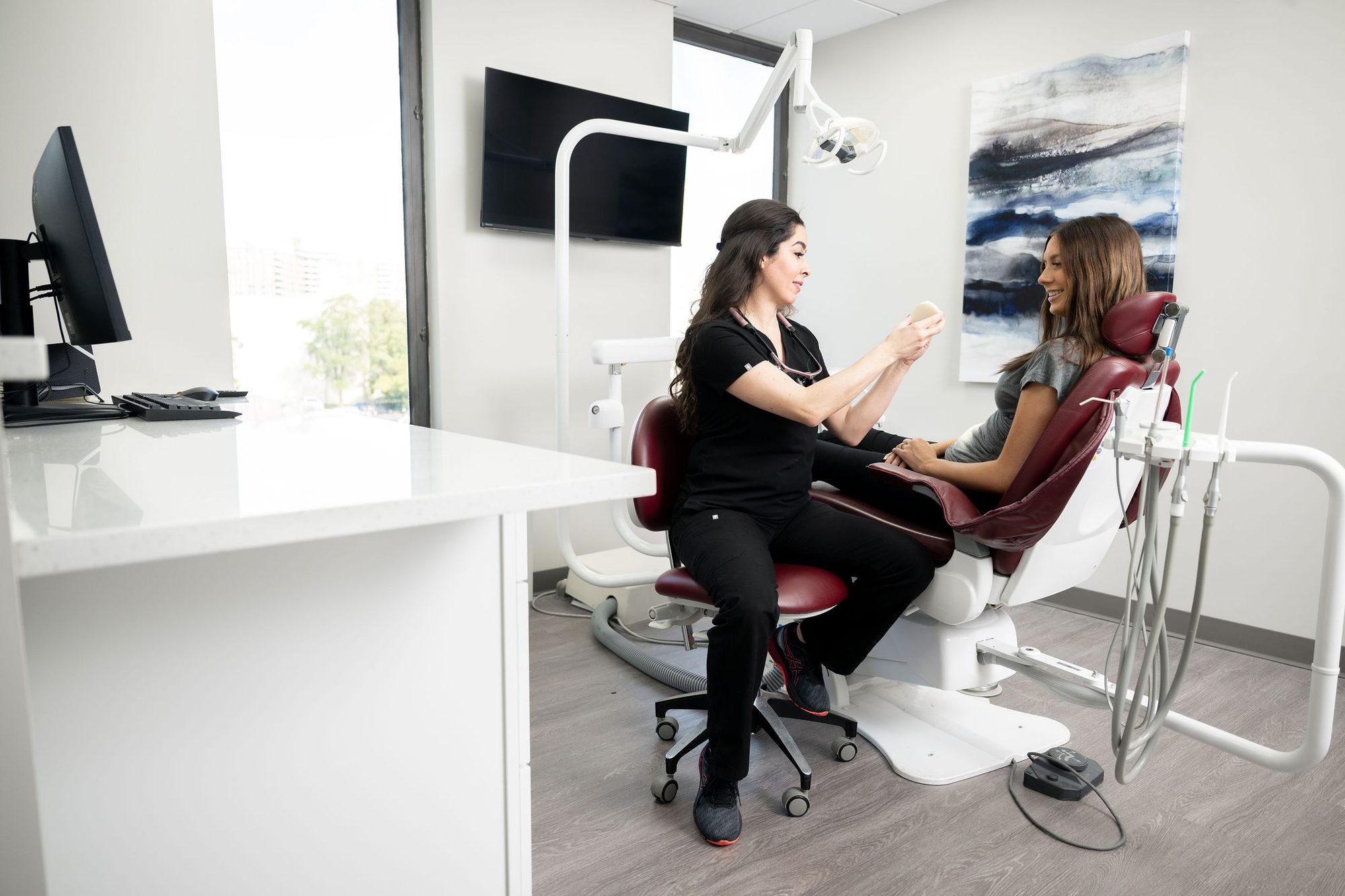
Not every toothache means a root canal, and not every infected tooth can be saved. We'll take an X-ray and test the tooth's nerve response before recommending treatment.
Pain that lingers after hot or cold, or wakes you up at night, often points to an infected nerve.
Sharp pain to hot or cold that lasts well after the stimulus is removed is a common early sign.
A small bump on the gum near a tooth can be a sign of an abscess forming at the root.
A tooth that turns gray or dark compared to its neighbors may have a dying or dead nerve inside.
Sharp pain on pressure can mean the infection has spread to the bone around the root tip.
Sometimes an infection shows up on X-ray before it causes noticeable pain at all.
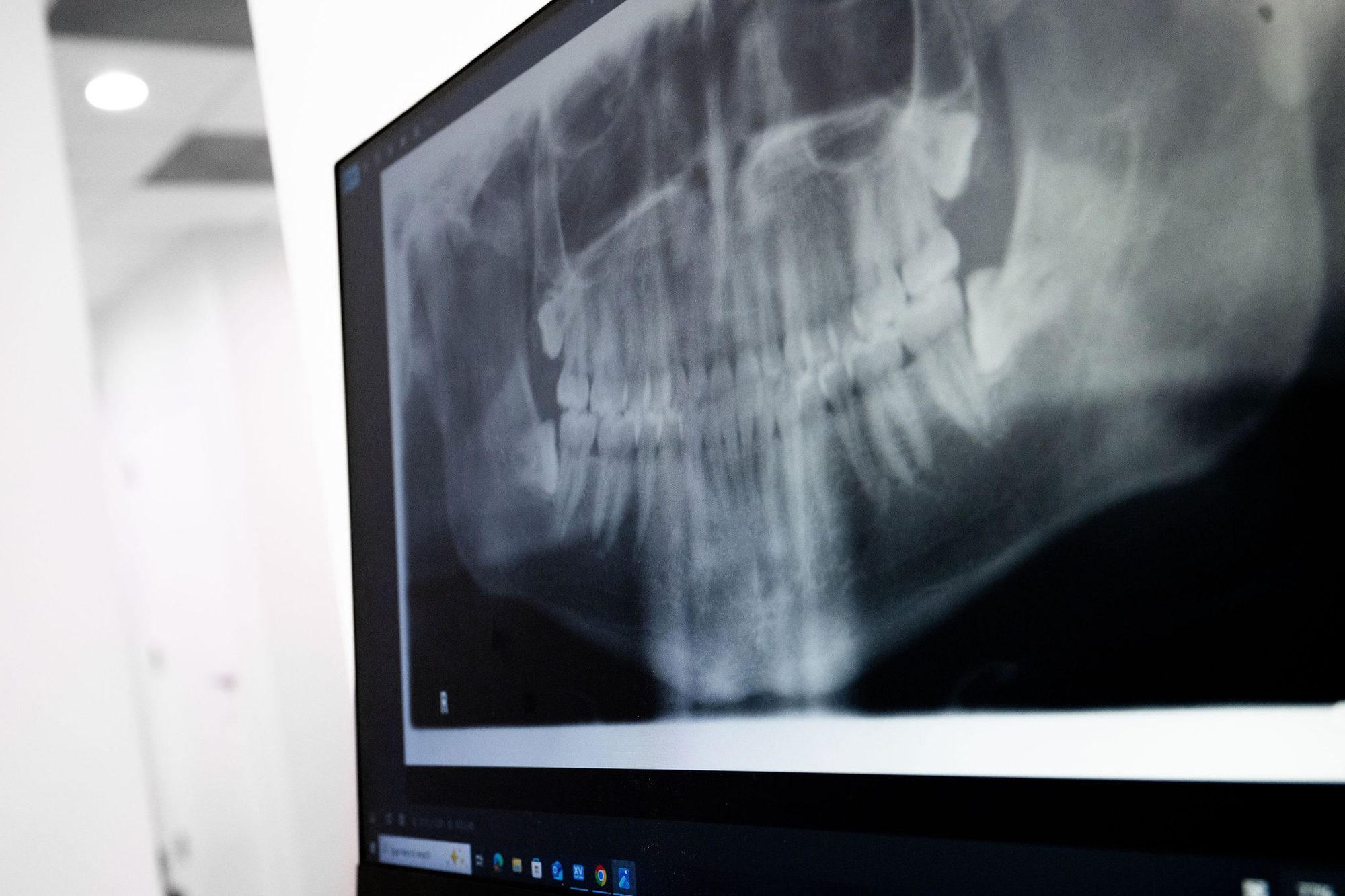
We take a digital X-ray and test the tooth's nerve response to confirm the infection and see how far it's spread before recommending treatment.
The tooth is fully numbed, sedation is available if you'd like it, and a small opening is made through the top of the tooth to reach the infected pulp.
The infected tissue is removed from each canal inside the root, the space is cleaned and shaped, then filled with a biocompatible material and sealed.
A root canal-treated tooth becomes brittle, so it's typically capped with a crown at a follow-up visit to protect it from cracking under normal chewing force.
Extraction followed by an implant is sometimes the right call, especially if a tooth is fractured below the gumline. But when a tooth can be saved, keeping your natural tooth root usually costs less, takes less time, and preserves more of your jawbone.
Root canal cost depends on which tooth is treated, molars have more canals and take longer than front teeth, plus whether a crown is needed afterward. Most dental insurance plans cover a significant portion of root canal therapy as a major procedure. We'll verify your benefits and give you an exact out-of-pocket number before we begin.
Our clinic is in network with most PPOs and accepts all insurance plans. We'll verify your benefits and file the claim on your behalf.
Spread payment over time with interest-free financing through Lending Club or CareCredit, so cost isn't the reason you delay treatment.
Not insured? Our in-house membership plan simplifies preventative care and saves on treatment, a smart alternative when insurance isn't a fit.
Learn About MembershipOur team handles root canal therapy in-house, so you're not referred out mid-treatment, and the same team coordinates the crown that follows.
Over a decade of practice in the DC area. Certified Invisalign provider and AAFE-certified in Botox therapeutics for TMJ and facial pain.
Restorative, cosmetic, and complex oral surgery. Invisalign and dental implant certified, with a special focus on patients with dental anxiety.
Compassionate care with a friendly approach. A Fairfax native who combines clinical expertise with genuine warmth that puts patients at ease.
Multi-disciplinary, comprehensive dentistry with a pragmatic approach. Passionate about patient education and staying current with advances in dental care.
Root canals have a reputation that doesn't match the modern procedure. Book an exam at any of our three offices and we'll explain exactly what your tooth needs.
Book ConsultationThe tooth is fully numbed before treatment starts, so the procedure itself is typically no more uncomfortable than getting a filling. Most of the pain patients associate with root canals actually comes from the infection beforehand, which the treatment relieves. Sedation is available if dental anxiety is a concern.
A root canal-treated tooth that's properly crowned can last 15 years or more, often for the rest of your life. The crown is what protects the tooth long term, since the treated tooth becomes more brittle without its nerve supply.
You can, but extraction means replacing the tooth later with an implant or bridge to keep neighboring teeth from shifting, which usually costs more and takes longer overall. Saving the natural tooth with a root canal is generally the more efficient path when the tooth is salvageable.
An untreated infection doesn't resolve on its own. It can spread into the surrounding bone, cause a painful abscess, and in rare cases become a serious health risk if it reaches other parts of the body. It's worth addressing as soon as symptoms appear.
Almost always, especially on back teeth that take heavy chewing force. Without the nerve inside, the tooth becomes more prone to cracking, and a crown protects it the same way it would protect any heavily restored tooth.
We prioritize same-week appointments for tooth pain, since infections don't wait. Call the office nearest you and describe your symptoms, we'll get you in as quickly as possible.
Bring us the tooth that's been keeping you up at night. We'll take an X-ray, confirm what's happening inside it, and get you out of pain the same day whenever possible.
No pressure. No obligation. Just a clear picture of what's possible.
New patients always welcome. Fill out the form and we'll reach out to schedule your exam, or call the office nearest you.